How Much Does Rebar Cost Per Foot in 2026?
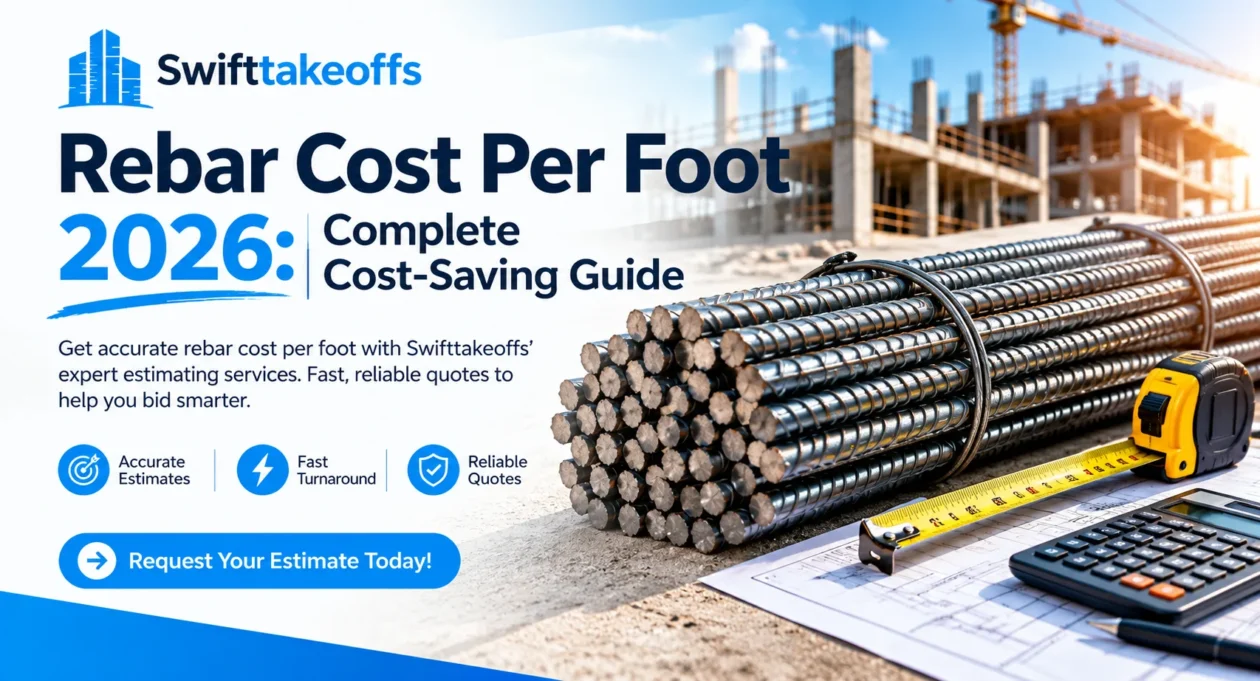
Rebar costs between $0.40 and $2.25 per linear foot in 2026 for the most common residential sizes, with #4 Grade 60 rebar averaging around $0.65 per foot delivered. Larger and specialty types, like stainless steel, can run as high as $6.80 to $9.00 per foot. Swifttakeoffs pulls these live rates into every project estimate automatically.
You’re probably here because a supplier just quoted you a number that didn’t match what you expected. That’s normal. Rebar price per foot shifts constantly based on diameter, grade, and where you’re buying. Think of it less as one fixed number and more as a moving target you need fresh data for.
Here’s the good news: once you know your bar size and grade, the math gets simple. A #3 bar runs light, a #6 bar carries serious weight, and grade jumps from 40 to 60 push the price up too. Nail those two variables and your budget stops guessing.
Rebar Cost Per Pound vs. Cost Per Foot – What’s the Difference?
Rebar cost per pound reflects raw steel weight, typically $0.50 to $1.00 per pound in 2026, while cost per foot reflects a fixed bar length that varies by diameter. A thicker bar weighs more per foot but often costs the same per pound. Converting between the two requires knowing the bar’s exact weight-per-foot from a standard chart.
These two numbers measure completely different things, and mixing them up is the fastest way to blow a budget. Rebar cost per pound tells you the raw material rate. Cost per foot tells you what a specific stick actually costs you at checkout, once diameter gets factored in.
Here’s the trick estimators use: multiply price per pound by weight per foot, and you get an accurate cost of rebar per linear foot instantly. A #4 bar weighs about 0.668 pounds per foot, so at $0.72 per pound, you’re looking at roughly $0.48 before markup.
Average Rebar Prices by Size (#3, #4, #5 Rebar Cost Per Foot)
#3 rebar costs $0.40 to $0.75 per foot, #4 rebar runs $0.55 to $0.95 per foot, and #5 rebar costs approximately $0.75 to $1.00 per foot in 2026. #6 rebar climbs to around $1.08 to $1.35 per foot due to its higher steel weight. Larger diameters always cost more per foot even at the same per-pound rate.
#3 rebar price starts light for patios and walkways, while #4 rebar cost covers most residential slabs and footings. #5 rebar cost per foot and #6 rebar price per foot step up for load-bearing work like foundations and retaining walls. The table below breaks down the numbers you’ll actually see quoted.
| Bar Size | Diameter | Weight per Foot | Typical Price per Foot (2026) |
| #3 | 3/8″ | 0.376 lbs | $0.40 – $0.75 |
| #4 | 1/2″ | 0.668 lbs | $0.55 – $0.95 |
| #5 | 5/8″ | 1.043 lbs | $0.75 – $1.00 |
| #6 | 3/4″ | 1.502 lbs | $1.08 – $1.35 |
Rebar Cost Per Ton: Bulk Pricing Explained
Steel rebar price per ton runs $1,300 to $2,000 in 2026, making bulk buying significantly cheaper per foot than retail short lengths. Section 232 steel tariffs, raised to 50% in 2026, have kept mill pricing elevated compared to 2024 levels. Contractors ordering multiple tons typically unlock better per-unit rates than homeowners buying individual sticks.
Buying by the ton changes the math entirely, and it’s worth understanding before you place a big order. Steel rebar price per ton reflects raw mill pricing, before cutting, delivery, or retail markup gets added. The bigger your order, the closer you get to that base number.
Tariffs have complicated things this year. Section 232 duties jumped to 50% in 2026, pushing mill rates higher than 2024 despite softer demand. A contractor buying six-plus tons still lands far below retail per-foot pricing, so bulk purchasing remains your best lever against rebar market price swings.
Cost to Install Rebar: Labor + Material Breakdown
Rebar labor cost per foot runs $1.50 to $3.00 for installation alone in 2026, pushing total installed cost to $2.25 to $5.00+ per linear foot once material is included. Complex structural patterns can climb to $12 to $18 per square foot installed. Labor rates for steel specialists are rising 6% to 8% annually due to ongoing shortages.
Material is only half the invoice. Cost to install rebar includes cutting, bending, positioning, and tying every bar by hand or machine, and that labor adds up fast. Skilled steel-fixing crews are in short supply nationwide, and that scarcity shows up directly in your quote.
When you combine rebar and labor cost, expect $2.25 to $5.00 per linear foot for straightforward slabs. Prefabricated rebar mats can cut on-site labor by 40% to 60%, though material costs rise 15% to 25%. For a full rebar installation cost per square foot, budget $4.50 to $9.00 on typical residential work.
Concrete Rebar Cost for Slabs, Foundations & Footings
Rebar cost for a slab typically adds $150 to $1,000 in material for driveway-sized pours, while foundation and footing work scales with linear footage and bar spacing. Rebar cost per square foot concrete runs roughly $4.50 to $9.00 installed for standard residential grids. Retaining walls and heavier structural pours push costs toward the higher end of that range.
Every application calls for a different approach. Rebar cost for foundation work depends on footing depth and spacing, while rebar cost for driveway projects scales with slab thickness and grid pattern. Thinner residential patios under four inches often skip rebar altogether, saving you material and labor both.
Heavier structures need more steel and tighter spacing. Rebar for retaining wall cost and cost of rebar for footings run higher than flatwork because of vertical reinforcement and denser grids. If you’re pouring a standard slab, budgeting $50 to $360 in rebar material alone is a realistic starting range.
Factors That Affect Rebar Cost Per Foot (Grade, Size & Market Rates)
Grade 60 rebar cost runs higher than Grade 40 because of its added tensile strength, and bar diameter multiplies that difference across a project. Section 232 tariffs at 50% and rising specialist labor rates are the two biggest external forces pushing 2026 prices up. Coating type and order quantity round out the list of controllable variables.
Three things move your number more than anything else: size, grade, and timing. Rebar sizes and prices climb together, since a bigger diameter always means more steel weight per foot. Grade 60 rebar cost sits above Grade 40 because it handles more load before bending or failing.
Beyond the bar itself, ask why did rebar prices go up this year, and tariffs top the list. Section 232 duties at 50%, tight scrap supply, and rising specialist labor rates are squeezing margins across the industry. Locking in pricing early protects your budget against rebar prices today shifting again tomorrow.
Coating and material type shift the price fast:
| Rebar Type | Typical Price per Foot (2026) |
| Carbon steel (standard) | $0.40 – $1.35 |
| Galvanized rebar price | $1.20 – $1.60 |
| Epoxy coated rebar cost | +30% to 50% over base |
| Stainless steel rebar cost | $3.50 – $8.00 |
| Fiberglass rebar cost | $0.65 – $2.50 |
How to Calculate Rebar Cost for Your Project
To calculate rebar cost, multiply total linear footage needed by the weight per foot for your bar size, then apply the current price per pound or per ton. Add cutting, bending, and delivery fees for a true installed total. A rebar cost calculator automates this, but the underlying math is simple enough to check by hand.
Knowing how to estimate rebar cost yourself keeps suppliers honest and protects your bid. Start with your drawings, measure total footage per bar size, and multiply against current pricing. It’s simple math, but it only works if your quantities and current rates are both accurate.
- Measure total linear footage by bar size from your drawings.
- Multiply footage by weight per foot for total pounds needed.
- Apply current price per pound or per ton.
- Add cutting, bending, waste factor, and delivery.
- Cross-check totals with a takeoff service before ordering.
That’s exactly where a proper rebar takeoff earns its keep. A rebar quantity calculator built for professional estimating catches waste factors, lap splices, and spacing details that hand-counting misses. Skipping this step is how projects end up short on-site or over-ordering expensive steel nobody needed.
Get Accurate Rebar Cost Estimates with Swifttakeoffs
Swifttakeoffs delivers accurate rebar estimating services by combining current market pricing with precise material takeoffs pulled directly from your project drawings. Every estimate accounts for bar size, grade, spacing, and waste factor automatically. This removes the manual counting errors that cause budget overruns on concrete reinforcement work.
You shouldn’t have to guess at rebar estimating services or hope your spreadsheet caught everything. Swifttakeoffs reads your drawings and produces a precise construction material takeoff covering every bar, splice, and spacing detail. It’s built to remove the manual errors that quietly inflate concrete reinforcement budgets.
Beyond rebar, our concrete estimating services cover the full reinforcement picture, including rebar mesh cost and combined material-plus-labor projections. You get numbers that hold up against actual site conditions, not rough guesses pulled from outdated pricing charts sitting in someone’s old bid file.
Why Choose Swifttakeoffs for Rebar Takeoff & Estimating Services
Swifttakeoffs stands out among steel rebar suppliers and estimators by combining fast turnaround with detailed, drawing-based takeoffs rather than rough square-footage guesses. Every estimate reflects current mill and market pricing, bar spacing, and grade requirements specific to your project. This accuracy protects contractors from costly change orders and material shortages mid-pour.
Plenty of tools promise a building material cost estimator, but few actually read your drawings line by line. Swifttakeoffs does, cross-checking bar count against spacing charts and current average cost of rebar figures. That precision is what separates a usable bid from a rough ballpark guess.
Comparing rebar vs wire mesh cost or checking against a steel rebar supplier’s quote takes minutes, not days, once your takeoff is done right the first time. Contractors who partner with Swifttakeoffs report fewer disputes, faster bid turnaround, and estimates that still hold up when the concrete truck arrives.
Book Your Free Rebar Cost Estimate
Ready to stop guessing and start building with real numbers? Book a free consultation with Swifttakeoffs today, and we’ll turn your drawings into an accurate, itemized rebar and concrete estimate within 24 to 48 hours. No obligation, no guesswork, just the numbers you need to bid with confidence.
Frequently Asked Questions
How much does rebar cost per foot in 2026?
Rebar costs $0.40 to $2.25 per foot for standard sizes, with #4 Grade 60 averaging around $0.65 per foot delivered. Specialty types like stainless steel run higher, up to $8.00 per foot.
Is rebar expensive compared to wire mesh?
Not usually. Rebar vs wire mesh cost favors mesh for thin residential slabs, but rebar offers more strength per dollar for foundations, driveways, and load-bearing pours where mesh alone isn’t enough.
What is the average price of rebar per ton?
Steel rebar price per ton runs $1,300 to $2,000 in 2026. Buying in bulk quantities significantly lowers your effective cost per foot compared to retail short lengths.
Why did rebar prices go up in 2026?
Section 232 steel tariffs rose to 50%, tightening import supply, while scrap availability and rising steel-fixer labor rates added further pressure on mill pricing nationwide.
How do I estimate rebar cost for my project?
Multiply your total linear footage by weight per foot, then apply the current price per pound. A professional rebar takeoff catches waste factors and spacing details that manual counting misses.
For More Information Keep Visiting swifttakeoffs.