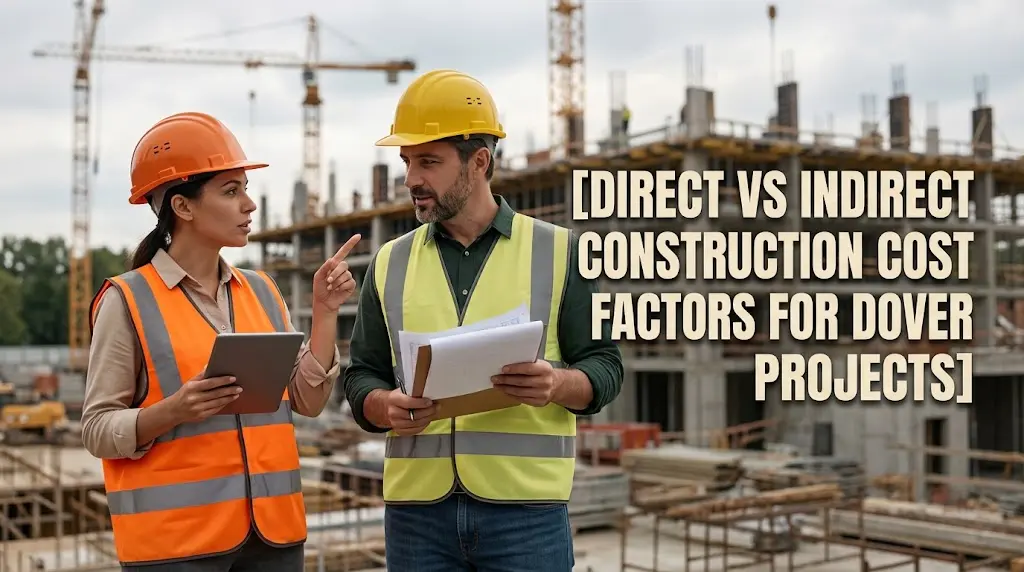
Understanding direct vs indirect construction cost Dover projects is important before work begins. Both cost types affect the final budget in different ways. Direct costs usually connect to physical construction work. Indirect costs support the project but may not become part of the finished structure.
A clear cost plan helps owners avoid budget surprises. It also helps contractors prepare better bids and schedules. For projects in Dover and other Delaware areas, local site needs can also affect pricing. Knowing where each expense belongs makes the full construction estimate easier to understand.
What Are Direct Construction Costs in Delaware?
Direct construction costs are expenses tied to actual project work. They can usually be linked to a specific task or building component. Common examples include labor, materials, equipment, and subcontractor work.
These expenses often make up a large part of a construction cost breakdown. They can also change quickly as project conditions change. That is why accurate quantities and updated pricing matter during project cost estimation.
How Do Construction Labor Costs Affect a Project?
Construction labor costs cover the people doing physical project work. This may include carpenters, electricians, plumbers, equipment operators, and general laborers. Labor costs depend on skill level, project length, and work complexity.
A simple project may need fewer specialized workers. A larger commercial project may need several skilled trades at once. Scheduling also affects labor cost. Delays can create extra hours, overtime, or repeated site visits.
Labor should therefore be estimated by trade and project phase. This creates a clearer picture of expected spending.
What Should Be Included in Construction Material Costs?
Construction material costs include products used to build the project. Examples include concrete, steel, lumber, drywall, roofing, wiring, and plumbing materials. Finishes and fixtures can also fall into this group.
Material pricing can affect the budget before construction starts. Delivery charges may also matter, especially for large or heavy materials. Waste should be considered as well.
A strong construction estimate should not only list material prices. It should also consider quantities, delivery needs, storage, and expected waste. These details create a more realistic budget.
How Do Subcontractor Costs Fit Into Direct Costs?
Subcontractor costs usually cover specialized work completed by outside companies. Electrical, plumbing, HVAC, roofing, painting, and concrete work are common examples.
These costs should be reviewed carefully during construction budgeting. One subcontractor quote may include labor and materials. Another may cover labor only.
That difference can create confusion during bid comparison. Contractors should check exactly what each subcontractor includes. Clear scopes help prevent missing work and unexpected change orders later.
Are Equipment Costs Always Direct Construction Costs?
Equipment costs are often direct when equipment supports a specific project task. Excavators, cranes, lifts, compactors, and loaders are common examples. Rental fees, fuel, operators, and transport may also affect equipment costs.
The correct approach depends on how the equipment is used. A machine rented only for one project is easier to assign directly. Shared company equipment may need a different cost method.
Good project cost estimation should also consider equipment downtime. A rented machine sitting unused can still add cost.
Why Do Site Preparation Costs Matter?
Site preparation costs can appear before major building work begins. They may include clearing, grading, excavation, demolition, drainage work, and temporary access.
These costs can vary from one property to another. A flat, accessible site may need limited preparation. A difficult site may require more equipment and labor.
Existing utilities can also affect early project work. Soil conditions, drainage needs, and access points should be reviewed before pricing. Missing these items can make the construction estimate look lower than the real project cost.
What Are Indirect Construction Costs?
Indirect construction costs support the overall project instead of one physical building task. They may include supervision, project management, temporary utilities, insurance, safety measures, permits, and site administration.
These expenses are easy to underestimate because they are less visible. However, they can still affect the total project cost. A longer schedule often increases indirect expenses because many of them continue throughout construction.
Good estimating should separate these costs from direct work. This gives owners a more useful view of where money is going.
What Are Common Indirect Project Expenses?
Common indirect expenses include project supervision and administrative support. Temporary fencing, site offices, portable restrooms, and temporary power may also be included.
Safety equipment and project documentation can create additional costs. Insurance, bonds, permits, and compliance expenses may also affect the budget.
Not every company classifies costs in exactly the same way. What matters most is consistency. Each cost should have a clear place in the estimate.
This makes construction pricing easier to review and compare.
How Do Direct vs Indirect Construction Costs Affect Delaware Projects?
The difference between direct and indirect costs helps explain how a project budget works. Direct costs usually rise when the amount of physical work increases. Indirect costs often rise when project duration or management needs increase.
For example, adding more flooring increases material and labor costs. A schedule delay may instead increase supervision, temporary facility, and administrative expenses.
This distinction helps owners understand why two similar projects may have different totals. It also gives contractors better control over pricing decisions.
For Delaware projects, local site access, permitting steps, project size, and trade availability can influence both categories.
How Does a Construction Cost Breakdown Improve Estimating?
A construction cost breakdown divides the project into clear spending categories. This makes the estimate easier to check and update. It also helps identify where the largest budget risks may exist.
Instead of showing one total number, the estimate can separate labor, materials, equipment, subcontractors, and indirect expenses. Owners can then see which parts of the project drive the most cost.
This approach also improves communication. If pricing changes, the affected category can be adjusted without rebuilding the entire estimate.
A detailed breakdown is especially useful during design changes. It shows how one decision may affect the wider budget.
What Affects Construction Estimating Costs in Dover?
Several factors can affect construction estimating costs Dover projects. Project size is one of the biggest factors. For local projects, construction cost estimating services in Dover can help organize quantities, labor, materials, and other pricing factors into a clearer estimate.
The quality of plans also matters. Clear drawings and specifications make quantities easier to calculate. Incomplete plans may require more assumptions and revisions.
Site conditions can also affect estimating work. Existing structures, tight access, utilities, and grading needs may require extra review.
The level of estimated detail is important too. A rough early estimate usually needs less work than a final bid estimate with detailed quantities and subcontractor pricing.

How Can Contractors Improve Project Cost Estimation?
Better project cost estimation starts with accurate project information. Contractors need current drawings, clear specifications, and a defined scope. Missing details often lead to pricing gaps.Professional cost estimating services can help contractors review project details, quantities, and pricing before bids are finalized.
Quantities should be checked carefully. Small errors can become expensive when repeated across large areas.
Contractors should also compare supplier and subcontractor quotes on the same scope. This reduces the risk of comparing incomplete prices.
Allowances should be clearly marked when final selections are not available. Contingencies should also be used for real uncertainty, not hidden estimating mistakes.
Regular estimate updates help keep the budget connected to the latest project decisions.
How Should Construction Budgeting Be Managed?
Construction budgeting should begin before major commitments are made. The first budget can start with early design information. It should then become more detailed as plans improve.
Each major cost category should have its own budget amount. Changes should be recorded as they happen. This helps owners understand the effect of design choices before construction moves forward.
A useful budget should also include indirect expenses and reasonable contingency. Focusing only on labor and materials can create an incomplete picture.
Good construction budgeting is not only about reducing cost. It is about knowing where money is needed and why.
What Factors Influence Construction Pricing?
Construction pricing depends on more than square footage. Project complexity, schedule, site conditions, materials, and trade requirements all matter.
A simple building with easy access may be more predictable to price. A renovation can be harder because existing conditions may not be fully visible.
Schedule pressure can also affect pricing. Faster work may require more crews, overtime, or special coordination.
Design choices have a major effect as well. Premium finishes, custom systems, and specialized equipment can increase direct costs quickly.
Strong construction pricing should therefore be based on the actual project scope, not one general cost figure.
How Do You Calculate the Total Project Cost?
The total project cost is broader than the cost of physical construction. It normally combines direct construction expenses with indirect project costs. Other owner-side costs may also need to be considered.
A simple way to think about it is:
Direct Costs + Indirect Costs + Allowances + Contingency = Estimated Construction Budget
The full development budget may include other items beyond construction. These could include design services, financing, property expenses, or owner-provided equipment.
The exact structure depends on the project. The important point is to define what the estimate includes.
A total without a clear scope can be misleading.
Why Is Cost Classification Important Before Construction Starts?
Clear cost classification makes project decisions easier. Owners can see which expenses create the building and which support the construction process.
It also improves cost control during construction. When an expense changes, the team knows which budget category needs attention.
This becomes useful during value engineering. Direct costs may be reduced through material or design changes. Indirect costs may be reduced through better scheduling or site management.
Without clear categories, cost savings can be difficult to measure. A structured estimate gives the project team a better financial picture from the start.
FAQs
What is the main difference between direct and indirect construction costs?
Direct costs are tied to physical construction activities. They can include labor, materials, equipment, and subcontractor work. Indirect costs support the project as a whole. These may include supervision, temporary facilities, insurance, permits, and project administration. Both types should appear in a complete construction estimate. Leaving indirect costs out can make an early budget look lower than the actual amount needed.
Are subcontractor costs considered direct costs?
Subcontractor costs are usually treated as direct costs when they complete specific construction work. Examples include electrical, plumbing, roofing, concrete, and HVAC work. However, the exact classification can depend on the contractor’s accounting method. The most important step is keeping the classification consistent. The estimate should also explain what each subcontractor price includes so labor, materials, and related work are not counted twice.
Why can two Delaware construction estimates have different prices?
Two estimates can differ because contractors may use different labor rates, supplier quotes, schedules, and assumptions. They may also interpret the project scope differently. One estimate may include more indirect costs or stronger contingency. Another may exclude certain items. Comparing only the final price can therefore be misleading. Owners should compare the construction cost breakdown, exclusions, allowances, and scope behind each number.
How can I make a construction estimate more accurate?
Start with clear plans and a detailed scope. Check quantities carefully and use current supplier information when possible. Review subcontractor quotes for missing work and different assumptions. Site conditions should also be considered early. Separate direct and indirect costs so important expenses are not hidden. Finally, update the estimate when design or schedule changes occur. An estimate becomes less useful when it no longer matches the current project.
What costs are commonly missed in construction budgeting?
Temporary facilities, supervision, equipment transport, permits, waste, and site preparation are often overlooked. Small administrative and safety costs can also add up over a long project. Owners may also forget allowances or contingency for unknown conditions. These missed items can make the starting budget unrealistic. A detailed construction cost breakdown helps identify them before work begins and gives the project team a clearer view of expected spending.
Does site preparation affect the total project cost?
Yes. Site preparation can have a strong effect on the total project cost. Clearing, grading, excavation, drainage, demolition, and utility work may all be needed before construction begins. The amount depends on existing site conditions. Difficult access or unexpected ground conditions can also increase labor and equipment needs. Reviewing the site early helps create a more realistic construction estimate and reduces the chance of major budget surprises later.